
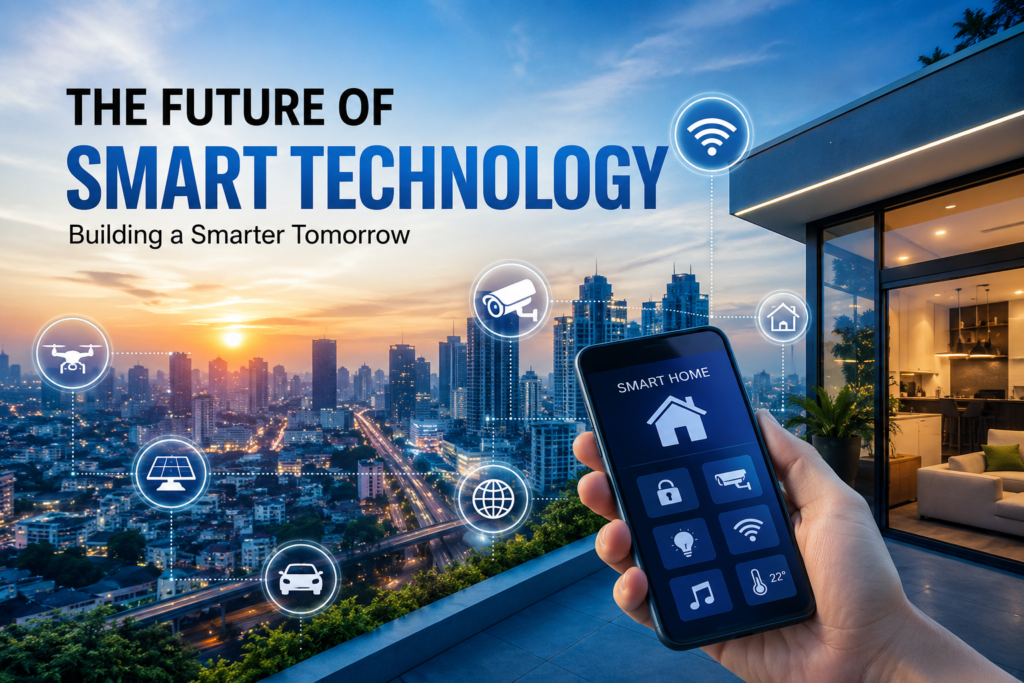
Technology is changing the way people live, work, and communicate. From smartphones to smart homes, modern innovations are making daily tasks easier and faster. In recent years, smart technology has become an important part of everyday life, helping individuals save time, improve productivity, and stay connected with the world.
What is Smart Technology?
Smart technology refers to devices and systems that use artificial intelligence, the internet, and automation to perform tasks efficiently. These technologies can learn user behavior, provide recommendations, and even operate automatically without human involvement.
Examples of smart technology include:
- Smart TVs
- Voice assistants
- Smart watches
- Home security systems
- Smart refrigerators
- Automated lighting systems
These devices are connected through the internet and can often be controlled using mobile applications.
Benefits of Smart Technology
1. Convenience
One of the biggest advantages of smart technology is convenience. People can control lights, fans, cameras, and even kitchen appliances from their smartphones. Voice assistants can help users set reminders, search information, or play music instantly.
2. Improved Security
Smart security cameras and door locks provide better protection for homes and offices. Users can monitor their property in real time from anywhere in the world.
3. Energy Efficiency
Smart systems help reduce electricity usage by automatically turning off unused devices. This not only saves energy but also lowers utility bills.
4. Better Communication
Technology has made communication faster than ever. Video calls, instant messaging, and social media platforms allow people to stay connected globally.
Smart Technology in Education
Education has also improved with the help of smart tools. Students can attend online classes, access digital libraries, and use educational applications for learning. Teachers can create interactive lessons that make studying more engaging and effective.
Online learning platforms have opened opportunities for students worldwide, especially for those living in remote areas.
Challenges of Smart Technology
Although smart technology offers many benefits, there are also some challenges:
- Privacy concerns
- Cybersecurity risks
- High costs of advanced devices
- Dependence on the internet
Users should always protect their personal data and use secure passwords to reduce security risks.
The Future Ahead
The future of smart technology looks very promising. Artificial intelligence, robotics, and automation will continue to grow rapidly. Smart cities, self-driving cars, and advanced healthcare systems may become common in the coming years.
Businesses are also investing heavily in innovation to create smarter and more efficient products for consumers.
Conclusion
Smart technology is transforming modern life in many positive ways. It improves convenience, security, communication, and productivity. While there are some challenges, the benefits of technological advancement continue to shape a smarter and more connected future for everyone.